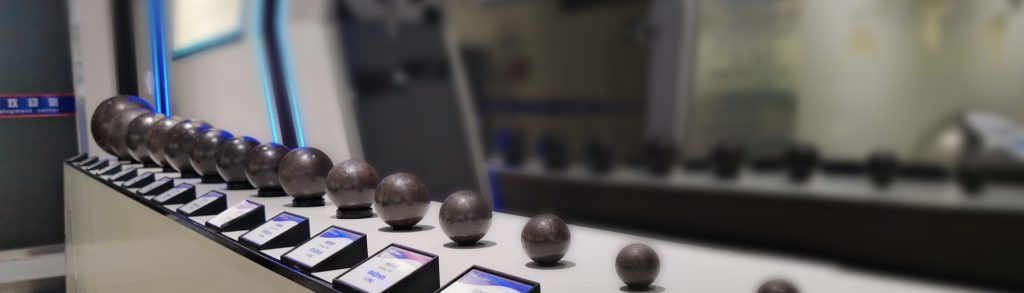
One collection of ore type, mill, mine delivery, current medium, grinding media control, energy consumption, particle size, production and delivery requirements.
Comprehensive Grinding Media Information List
Grinding media is a broad category encompassing various shapes, materials, and specifications. Selecting the right media is crucial for optimizing mill performance and controlling operational costs. Below is a structured information list covering the key aspects of grinding media.
1. Types of Grinding Media by Material
Grinding media can be divided into two primary categories: metallic and non-metallic.
| Material Type | Specific Examples | Key Properties & Applications |
|---|---|---|
| Metallic | Forged Steel Balls | Used in large-scale mining, cement, and SAG mills; sizes range from 20mm to 200mm; typically through-hardened for uniform wear. |
| High Chrome Cast Steel Balls | Excellent wear resistance; available in 10-18% chrome content; hardness ≥58 HRC; often have a rough initial surface. | |
| Carbon/Chrome/Stainless Steel Balls | Carbon steel is cost-effective; chrome steel offers high hardness (60-67 HRC); stainless steel is corrosion-resistant for food/pharma applications. | |
| Non-Metallic | Alumina Balls (various purities) | Used in high-energy mills for inks, paints, ceramics; excellent wear resistance and moderate cost; available in 90-99.9% purity. |
| Ceramic (Steatite) Satellites | Low-cost media with a unique “satellite” shape. | |
| Glass Beads | Used in milling; lead-free and less expensive; ~85% roundness. | |
| Zirconium Oxide Beads | High-density and high-hardness media, yttrium-stabilized for exceptional wear resistance; reduces contamination; suitable for demanding applications. | |
| Silicon Nitride/Carbide Balls | High-cost, specialized media; often used for milling same materials to avoid contamination. |
2. Critical Quality Parameters
A comprehensive quality report for grinding balls, especially for mining applications, should include detailed analysis of these parameters.
-
Chemical Composition: Full spectrographic analysis of carbon (C), chromium (Cr), manganese (Mn), silicon (Si), and trace elements. Gas analysis for nitrogen (N), oxygen (O), and hydrogen (H) is also essential to detect potential cracking issues.
-
Hardness Profile: Through-hardness is critical. Quality reports should provide surface hardness and a core hardness traverse to assess uniformity. Typical targets: surface ≥60 HRC, core ≥58 HRC, with a minimal gradient.
-
Microstructure: Analysis of phases like martensite, bainite, and retained austenite. A high percentage of tempered martensite indicates good toughness and wear performance.
-
Physical Properties: Includes impact toughness (e.g., >12 J/cm² for forged balls), breakage rate (<1% is typical for quality products), and density (~7.8 g/cm³ for steel).
-
Dimensional Accuracy: Critical for consistent mill operation. Includes diameter tolerance and roundness/sphericity (geometric symmetry).
-
Visual Inspection: Ensures balls are free from surface defects like cracks, pits, folds, or grooves that could cause premature failure.
3. Key Factors for Selecting Grinding Media
When choosing grinding media, consider these interrelated factors to match the media to your specific application.
-
Initial and Final Feed Size: Smaller media cannot effectively break up large particles, while smaller media are more efficient for producing ultra-fine particles.
-
Specific Gravity: Higher density media generally provide better grinding efficiency and are necessary for high-viscosity slurries to prevent floating.
-
Hardness: The harder the media, the better the grinding efficiency and the longer its wear life.
-
Compatibility: Consider the pH of the slurry (strong acids/bases may react with metallic media) and the potential for product contamination from media wear.
-
Total Cost of Ownership: A media that is 2-3 times more expensive may last considerably longer and be more cost-effective in the long run.
4. Industry Example: Goldpro Quality Specifications
Goldpro New Materials Co., Ltd. exemplifies a manufacturer specializing in large-diameter forged steel balls for mining, with annual production capacity exceeding 500,000 tons. Their product specifications detail the quality indicators mentioned above:
-
Specifications: Diameters ranging from Ф20mm to Ф200mm.
-
Hardness: Surface hardness of 61-63 HRC and core hardness reaching 58 HRC.
-
Toughness: Impact toughness greater than 12J, with drop-ball impact fatigue life exceeding 3,000 times.
-
Breakage Rate: Less than 1%.
-
Chemical Composition (Example): C:0.77%, Si:0.21%, Mn:0.74%, Cr:0.31%, with tight controls on harmful elements like P and S.